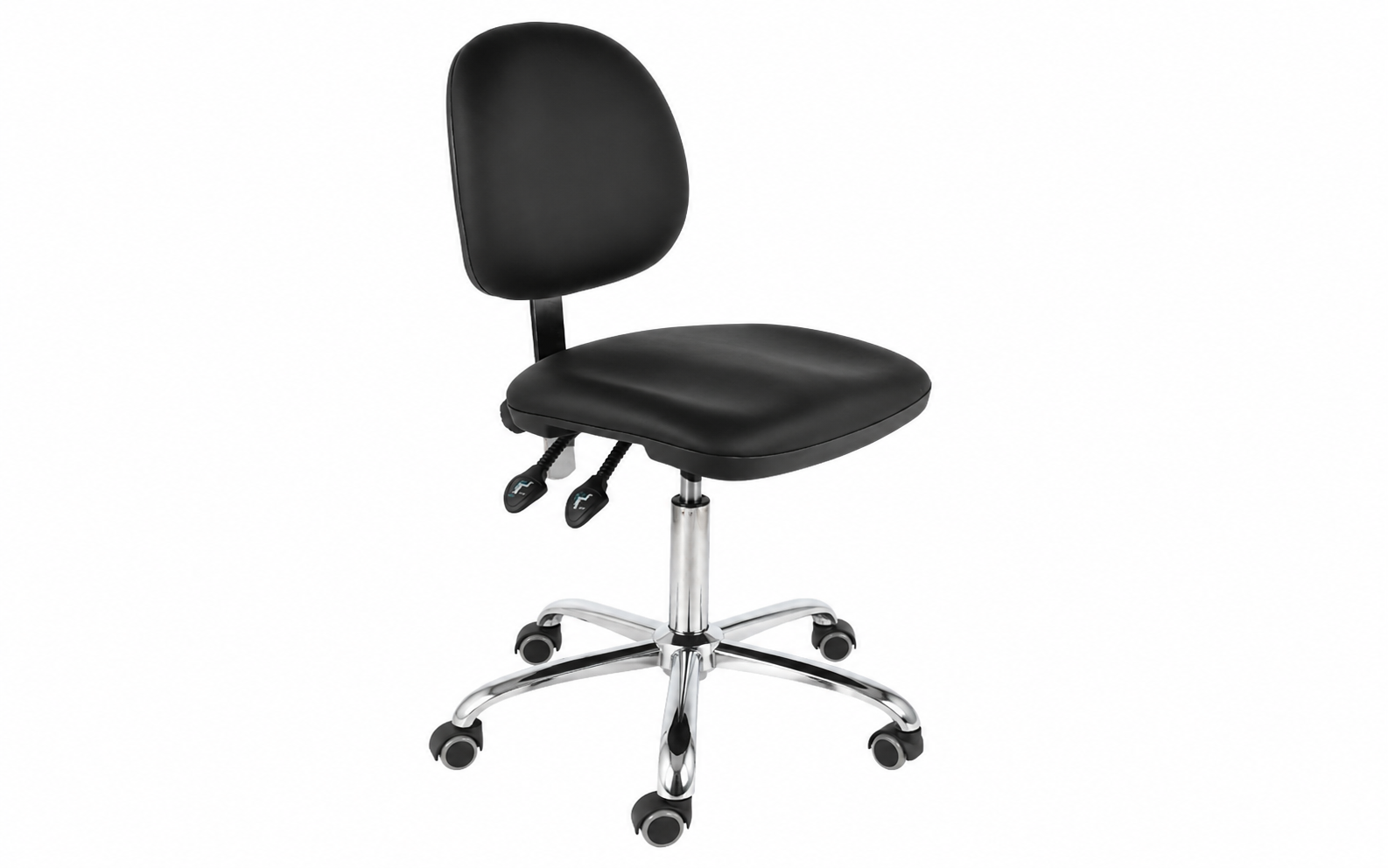
Companies in Argentina are investing in laboratory chair upgrades because the working environment is increasingly evaluated as a complete system in which furniture, instruments, people, and workflow must support one another. Older chairs are often retained long after laboratories have introduced new benches, digital equipment, shared workstations, or stricter maintenance routines, creating a mismatch between the facility and the seating used every day. This mismatch can reduce efficiency in subtle but important ways: users may sit too low or too far from the work surface, chairs may occupy excessive aisle space, movement between instruments may become awkward, and worn surfaces may be difficult to maintain. Upgrading seating allows companies to realign the workstation with current operational needs. In pharmaceutical plants, research centers, universities, food-testing laboratories, hospitals, and industrial quality-control departments, the decision is no longer based only on appearance or purchase price. Buyers are examining seat-height range, base dimensions, mobility, foot support, cleaning performance, component durability, and compatibility with different user groups. An industrial polyurethane with chrome foot ring and casters adjustable laboratory chair can be considered where elevated benches, shared users, frequent repositioning, and practical surface maintenance are part of the daily workflow. Argentine distributors can help companies assess whether this configuration fits by conducting site measurements, reviewing floor conditions, observing user movement, and comparing actual chair dimensions with bench and equipment layouts. This consultative approach turns an upgrade from a simple replacement purchase into a measurable workplace-improvement project. It also helps procurement teams justify the investment internally because the new seating can be linked to clearer outcomes such as reduced congestion, better workstation fit, easier cleaning, and more consistent user support.
Another reason companies are upgrading laboratory chairs is the need to standardize environments that have developed through years of separate purchases. Mixed seating creates operational inconsistency: one chair may use casters, another glides, one may reach a high bench, another may not, and replacement parts may vary across models. This complicates maintenance, inventory, user training, and future ordering. A structured upgrade program allows the company to define a limited set of approved chair configurations for different zones, reducing variation while preserving application fit. For example, general work areas may use one adjustable model, elevated benches may require foot-ring support, precision stations may need greater positional control, and high-mobility zones may require carefully selected casters. When an industrial polyurethane with chrome foot ring and casters adjustable laboratory chair is approved for a specific area, buyers can document the exact height range, caster type, base size, ring position, finish, and spare-parts requirements so that future orders remain consistent. This is highly relevant for B2B buyers in Argentina that operate several laboratories, branches, or project phases. Standardization helps purchasing teams negotiate more accurately, distributors plan stock, and facilities teams manage replacement components. It can also improve the visual professionalism of the workplace, which matters when customers, auditors, research partners, or institutional visitors evaluate the laboratory. Argentine distributors can strengthen their market position by offering upgrade audits, sample trials, configuration maps, phased quotations, and total-cost comparisons. Rather than asking a company to replace every chair at once, they can divide the project into priority areas, immediate risks, and planned future phases. This makes the investment easier to approve and aligns purchasing with budget cycles, construction schedules, or department expansion. A phased strategy also gives users time to test the new seating and provide feedback before the specification is extended across the facility.
The long-term financial and commercial logic of upgrading is equally important. Companies are recognizing that low-quality or unsuitable chairs can create recurring costs through frequent replacement, service complaints, inconsistent spare parts, and lost time during reordering. A more durable, maintainable, and correctly specified product may cost more initially but provide better value over its service life. Procurement teams should therefore compare total ownership factors such as expected durability, availability of casters and gas lifts, warranty response, cleaning requirements, delivery reliability, and the supplier’s ability to preserve the approved configuration. If an industrial polyurethane with chrome foot ring and casters adjustable laboratory chair performs well in one department, the distributor can maintain the specification for later expansion and support compatible replacement components when needed. This continuity reduces risk for both the buyer and the dealer. Upgrade projects also create opportunities for Argentine distributors to build stronger B2B relationships because the sale can include site planning, sample management, delivery coordination, user guidance, post-installation review, and replenishment forecasting. These services are difficult to compare on price alone and can differentiate a professional supplier from a transactional reseller. Distributors can also use real upgrade questions to create original Google-friendly content on bench compatibility, chair lifecycle planning, phased replacement, space efficiency, user adaptation, and laboratory furniture standardization. This attracts buyers who are actively evaluating workplace improvements rather than browsing generic product pages. For companies in Argentina, investing in laboratory chair upgrades is therefore a practical method for modernizing the working environment, improving consistency, supporting employees, reducing maintenance complexity, and creating a more reliable foundation for future laboratory growth.
READ MORE