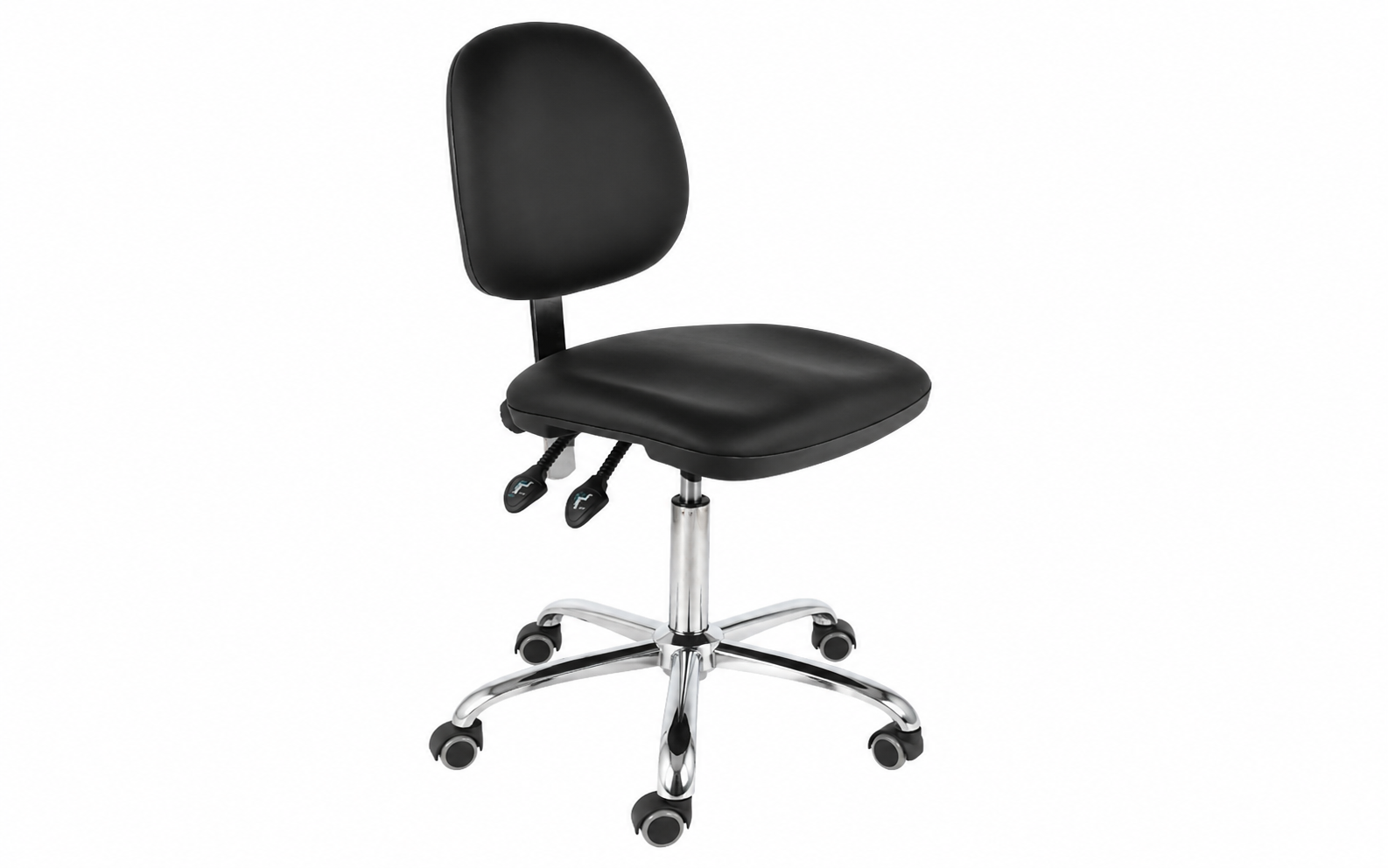
Buyers in Argentina can compare the overall advantages of laboratory chair suppliers more effectively by using a weighted scorecard that separates technical capability from sales presentation. Many suppliers appear similar at the quotation stage because they offer comparable images, dimensions, and product names, yet their real value differs in engineering knowledge, quality control, documentation, customization discipline, and responsiveness. A strong B2B evaluation should begin with the supplier’s ability to understand the application. Buyers should ask whether the company can explain how seat material, height range, base diameter, caster selection, foot support, and adjustment mechanisms interact with bench height, flooring, cleaning routines, user rotation, and shift intensity. When reviewing an industrial polyurethane with chrome foot ring and casters adjustable laboratory chair, the supplier should be able to discuss not only the listed features but also the conditions under which the configuration is suitable, the limits that should be considered, and the alternatives available for different laboratory zones. Argentine procurement teams can then score suppliers on the quality of technical drawings, specification accuracy, test records, sample consistency, component traceability, and willingness to clarify assumptions before the order. A supplier that answers detailed questions with precise evidence is usually more dependable than one that relies on broad claims. Buyers should also compare whether the supplier can support different sectors, including pharmaceutical plants, universities, clinical laboratories, food-testing facilities, electronics workshops, and industrial quality-control departments. Sector knowledge matters because each environment uses chairs differently, and a manufacturer with application experience is more likely to prevent costly mismatches. By assigning measurable scores to technical competence, application understanding, and documentation, buyers create a fair comparison that is less vulnerable to sales pressure or incomplete quotations.
The second part of the comparison should focus on commercial reliability and execution capability. A supplier’s advantage is not only the price offered but the ability to deliver the approved product consistently, on time, and with clear responsibility throughout the transaction. Buyers should compare production lead time, minimum order quantity, mixed-model flexibility, packaging standards, inspection procedures, export experience, payment terms, quotation validity, and the process for handling changes after approval. For an industrial polyurethane with chrome foot ring and casters adjustable laboratory chair, Argentine buyers should confirm whether the mass-production unit will use the same polyurethane seat, gas lift, chrome ring, casters, and base as the approved sample, and whether any substitution requires written permission. Suppliers should also explain how they control batch variation and how they identify components if a warranty issue occurs later. Logistics capability is equally important. A competitive supplier should provide realistic shipment planning, accurate packing data, clear labeling, and support for pre-shipment inspection. Distributors in Argentina should compare how each supplier responds when lead times change, freight costs rise, or a component becomes unavailable. The strongest partner communicates risks early and proposes practical alternatives, while a weak supplier may hide problems until the project schedule is already affected. Buyers should also evaluate total cost rather than unit price alone, including samples, customization, packaging, freight, taxes, assembly, spare parts, warranty, and the financial impact of delayed delivery. This broader comparison often reveals that the lowest quotation is not the lowest-risk option. A transparent supplier that provides complete commercial information can help buyers protect budgets and avoid repeated internal approvals caused by unexpected changes.
The final comparison should examine long-term partnership value, because B2B laboratory chair procurement rarely ends with one order. Argentine buyers and distributors need suppliers that can maintain approved specifications, provide replacement parts, support repeat orders, answer end-user questions, and help develop new market opportunities. When an industrial polyurethane with chrome foot ring and casters adjustable laboratory chair is adopted by one department or customer, the supplier should be able to preserve the configuration for future expansion and provide compatible casters, foot rings, seats, or adjustment components when needed. Buyers should ask for evidence of repeat-order management, warranty response time, spare-parts policy, and account support after delivery. Distributors should also compare the supplier’s willingness to provide original product data, application guidance, images, training materials, and technical content that can be adapted for the Argentine market. These resources help dealers build credible Google-friendly pages and answer customer questions without copying generic catalog text. A supplier that supports local marketing, samples, training, and account development offers more strategic value than one that only ships goods. To make the final decision, buyers can assign weights to technical fit, manufacturing consistency, commercial transparency, logistics, after-sales service, marketing support, and total cost, then test the highest-ranked suppliers through controlled samples or pilot orders. The pilot should verify dimensions, finish, adjustment, packaging, documentation, communication, and delivery performance under real conditions. By combining scorecards, reference checks, sample validation, and measurable service criteria, Argentine buyers can compare suppliers on overall value rather than price alone and select partners capable of supporting reliable projects, stronger customer confidence, and sustainable B2B growth.
READ MORE