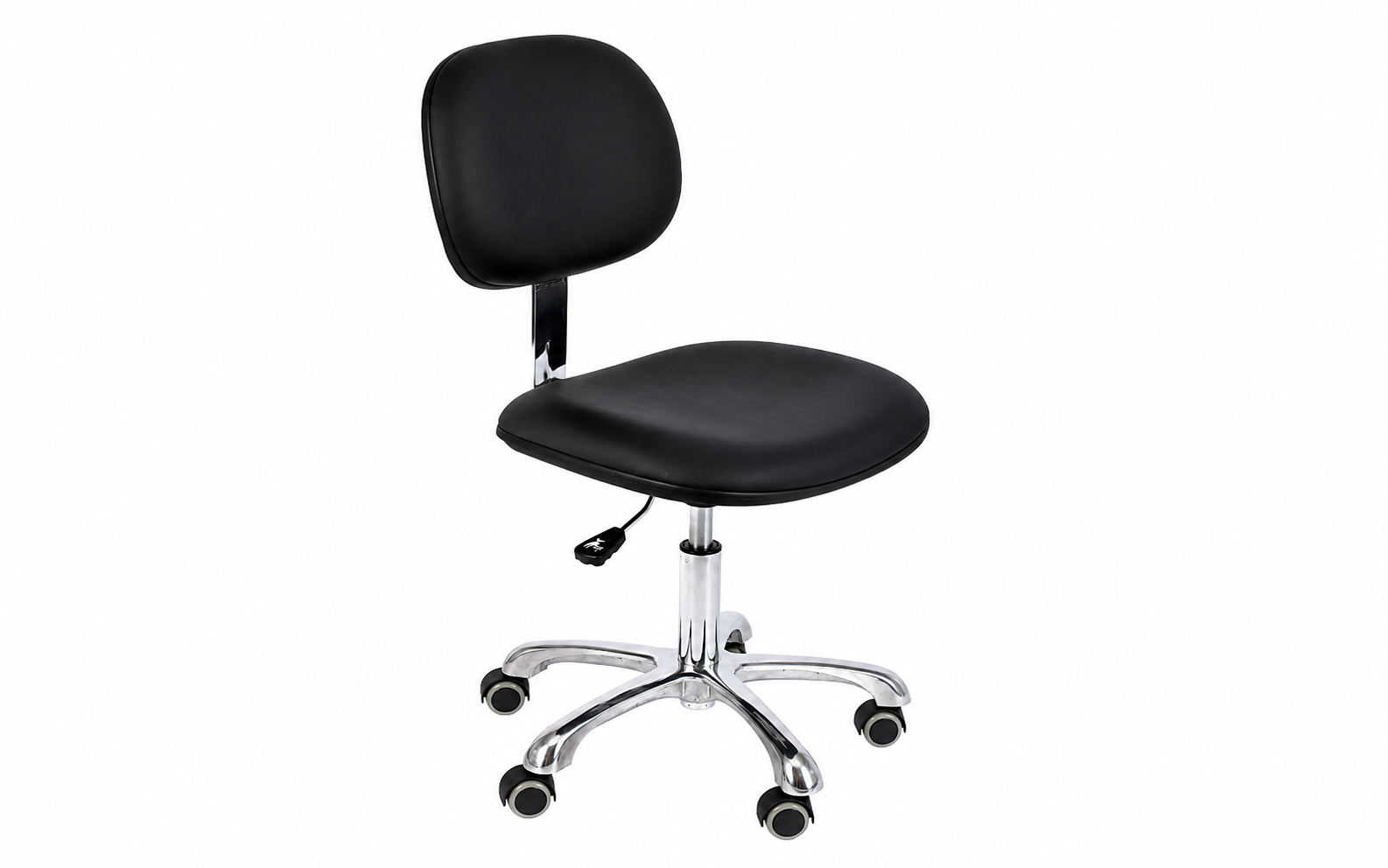
Argentine laboratory chair distributors can compress B2B purchasing timelines by redesigning sample inventory as an account-development system rather than a static display. The key is to position each sample as a temporary decision tool assigned to a named opportunity, a defined buying committee, and a measurable commercial objective. Many laboratories delay purchases because technical users, procurement officers, operations managers, safety teams, and finance staff evaluate different risks at different moments. A distributor can reduce those delays by preparing a sample package that answers those concerns simultaneously: a physical chair, a concise specification sheet, a cleaning and maintenance note, a dimensions guide, a checklist for user testing, and a quotation framework tied to likely order volumes. When the sample is an industrial polyurethane with chrome foot ring and casters adjustable laboratory chair, the distributor can invite users to test seat height, foot support, rolling movement, workstation access, surface wipe-down, and stability during repetitive tasks. This turns the buyer’s internal discussion into a shared observation process. Instead of waiting for one department to forward questions to another, the distributor can arrange a short trial day in which all relevant stakeholders review the same unit, record comments, and agree on the next commercial step. For Argentina-based distributors, this local demonstration capability is especially valuable because it removes the uncertainty associated with evaluating imported seating through photographs alone. It also signals that the distributor is invested in the customer’s application, not merely in closing a transaction. A well-managed sample inventory therefore becomes a form of sales enablement that supports faster qualification, more confident product matching, and earlier alignment on budget, timing, and quantity.
The second way sample inventory shortens the cycle is by giving distributors a platform for evidence-led selling. B2B buyers often hesitate because product claims are generic, while their own operating environment is specific. A distributor should therefore build a repeatable trial protocol around every sample. Before delivery, the salesperson can document bench height, room layout, flooring type, cleaning frequency, user shifts, mobility expectations, and any need for frequent repositioning. During the trial, the distributor can collect structured feedback from several users rather than relying on one informal opinion. For an industrial polyurethane with chrome foot ring and casters adjustable laboratory chair, the trial can focus on practical questions such as whether the chair moves smoothly between instruments, whether the foot ring supports users at elevated workstations, whether the polyurethane surface can be cleaned efficiently, and whether height adjustment works for different operators. These observations can be converted into a short decision report with photographs, approved specifications, open issues, and a recommended order configuration. That report helps the buyer’s internal sponsor defend the purchase when the proposal reaches procurement or finance. It also reduces the risk of late-stage objections because critical issues are identified before the final quotation. Distributors can strengthen this process further by maintaining two or three strategically selected sample units that represent the most common laboratory applications instead of trying to keep every possible model in stock. One sample can be optimized for general laboratory use, another for higher work surfaces, and another for environments where mobility and easy cleaning are the dominant concerns. The goal is not to create a large showroom; it is to create a fast-response demonstration fleet. Each unit should have a tracking record, cleaning log, loan period, responsible account manager, and scheduled follow-up date. By managing samples with the same discipline used for high-value sales opportunities, Argentine distributors can increase sample utilization, improve conversion data, and identify which sectors—pharmaceutical, educational, industrial testing, clinical, or food laboratories—move most quickly from evaluation to order.
A third advantage is that sample inventory can be linked to a commercial offer that makes the next step easy. After the trial, the distributor should not simply ask whether the customer liked the chair; the distributor should present a decision pathway. This may include a pilot purchase for one department, a volume quotation for multiple workstations, a replacement-parts plan, a delivery schedule, and a clear validity period for pricing. The sample can also support an account-based marketing campaign aimed at Argentine dealers, laboratory planners, furniture resellers, and end users. Original photographs, localized application notes, and trial-based articles can be published around topics such as laboratory seating evaluation, polyurethane chair maintenance, foot ring selection, caster suitability, and procurement planning. This creates unique Google-friendly content that reflects real local use cases rather than recycled manufacturer copy. When a distributor presents an industrial polyurethane with chrome foot ring and casters adjustable laboratory chair through a documented trial, a local service promise, and a defined follow-up process, the buyer receives more than a product demonstration; the buyer receives a lower-risk purchasing framework. The distributor should also measure the commercial performance of the program by tracking how many qualified trials are scheduled, how many involve multiple stakeholders, how many advance to pilot orders, and how many convert into repeat business. These metrics reveal whether the sample inventory is truly reducing decision time. Over several months, the distributor can refine which units to keep locally, which questions to ask before a trial, which proof points matter most, and which customer segments respond best. The result is a more predictable B2B sales engine: buyers reach technical confidence earlier, procurement teams receive clearer documentation, distributors spend less time repeating the same explanations, and customers gain faster access to seating that fits their work environment. For Argentine distributors seeking to differentiate through service, speed, and expertise, maintaining sample inventory is not merely a convenience; it is a practical method for shortening complex buyer journeys and building stronger long-term accounts.
READ MORE