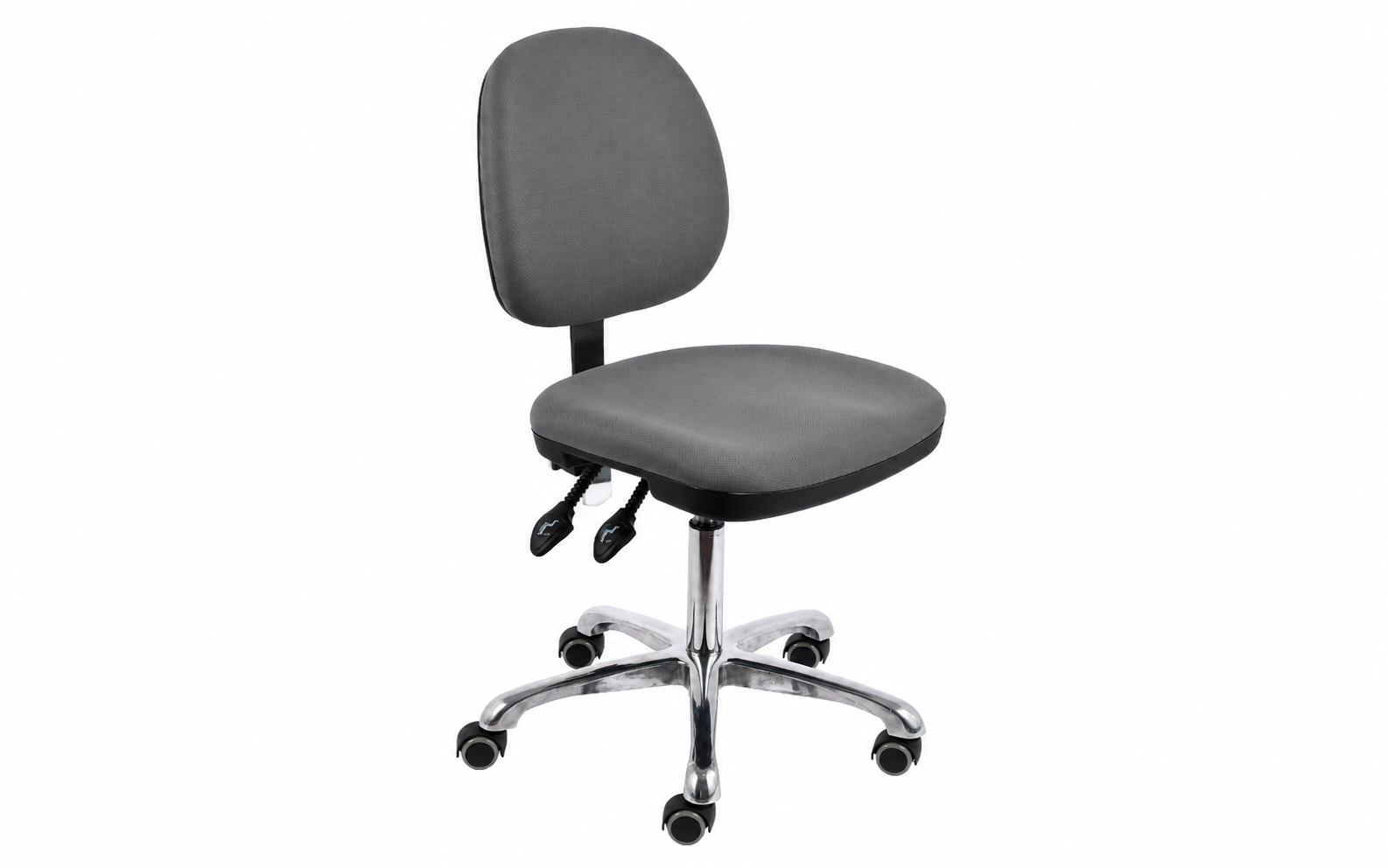
Laboratory projects in Argentina can identify procurement risks early by creating a chair-specific risk register before requesting final quotations. Many project teams evaluate seating too late, after benches, flooring, room layouts, and user workflows have already been fixed, which increases the chance of height mismatches, mobility problems, unsuitable materials, and rushed supplier decisions. A stronger B2B process begins by mapping how each laboratory zone will be used: the height of every workstation, the number of users per shift, the need for movement between instruments, cleaning frequency, floor type, access routes, and whether the chair must be shared by operators of different heights. These details should be translated into measurable acceptance criteria rather than general preferences. If a project is considering an industrial polyurethane with chrome foot ring and casters adjustable laboratory chair, the team should verify the required seat-height range, foot-ring position, caster compatibility, base diameter, polyurethane finish, user load, and clearance under benches. The risk register should then list what could go wrong, how likely it is, how serious the impact would be, who is responsible for prevention, and what evidence is needed before approval. Typical technical risks include chairs that cannot reach the correct working height, casters that perform poorly on the selected flooring, foot rings that are uncomfortable for long sessions, surfaces that do not support the intended cleaning routine, and dimensions that interfere with narrow aisles or equipment. Argentine distributors can add value by helping contractors and laboratory managers review drawings, measure real workstations, and test representative samples before mass ordering. This early-stage involvement reduces costly changes and allows the buyer to distinguish between genuine technical requirements and unnecessary features that inflate the budget without improving performance.
Supplier and commercial risks should be examined with the same discipline because a technically suitable model can still fail if the supplier cannot deliver consistent quality, complete documentation, or reliable after-sales support. Procurement teams should assess production capability, export experience, component traceability, inspection procedures, warranty terms, spare-parts availability, packaging standards, lead-time reliability, and communication quality. A sample should be compared with the approved drawing and then treated as a baseline for future inspection, not merely as a showroom item. For an industrial polyurethane with chrome foot ring and casters adjustable laboratory chair, buyers should confirm whether the final production will use the same seat material, adjustment mechanism, ring dimensions, caster specification, and base quality as the approved sample. They should also ask how the supplier controls batch variation and how replacement components will be identified if a claim occurs months later. Commercial risk is often hidden in incomplete quotations, so Argentine buyers should request clear information on tooling, customization, samples, freight, taxes, assembly, local delivery, inspection, and any cost triggered by quantity changes. Exchange-rate movement, payment timing, and import delays should be included in the project’s financial scenario rather than handled as surprises. Distributors can protect both margin and customer trust by defining quotation validity, order milestones, and responsibilities in writing. They should also avoid relying on one unverified source for critical components. A backup supplier, alternate caster option, or approved equivalent can prevent a small component shortage from delaying an entire laboratory opening. By combining due diligence with sample validation and commercial clarity, project teams can reduce the risk of selecting the lowest initial price but the highest total project cost.
Logistics, installation, and operational readiness form the final risk layer, and these issues should be planned before production begins. Chairs may arrive late, be damaged in transit, be stored in unsuitable conditions, or reach the site before rooms are ready. Packaging dimensions, unloading access, elevator size, warehouse capacity, assembly responsibility, delivery sequence, and final inspection should all be confirmed in advance. If a project includes an industrial polyurethane with chrome foot ring and casters adjustable laboratory chair, the delivery plan should specify whether the chair ships assembled or partially assembled, how the chrome ring and casters are protected, what spare parts accompany the shipment, and how each unit will be checked before handover. Argentine project managers can use a pre-delivery checklist that links furniture arrival to construction milestones, flooring completion, bench installation, and site access. A small contingency stock can also reduce disruption when a unit is damaged or when final user numbers exceed the original estimate. After installation, the project should conduct a short acceptance test covering height adjustment, stability, movement, foot support, surface condition, and fit at the workstation. Any issue should be recorded with photographs, batch references, and an agreed corrective action. These records create useful data for future projects and help distributors improve forecasting, supplier selection, and local inventory. They can also support original Google-friendly content on laboratory chair risk management, project readiness, sample approval, logistics planning, and supplier evaluation for Argentine buyers. The most successful B2B projects do not eliminate every risk; they identify the important ones early, assign ownership, define evidence, and prepare alternatives. This approach gives laboratories, contractors, distributors, and procurement teams a shared framework for protecting budget, schedule, quality, and long-term serviceability before the chairs become a critical problem.
READ MORE