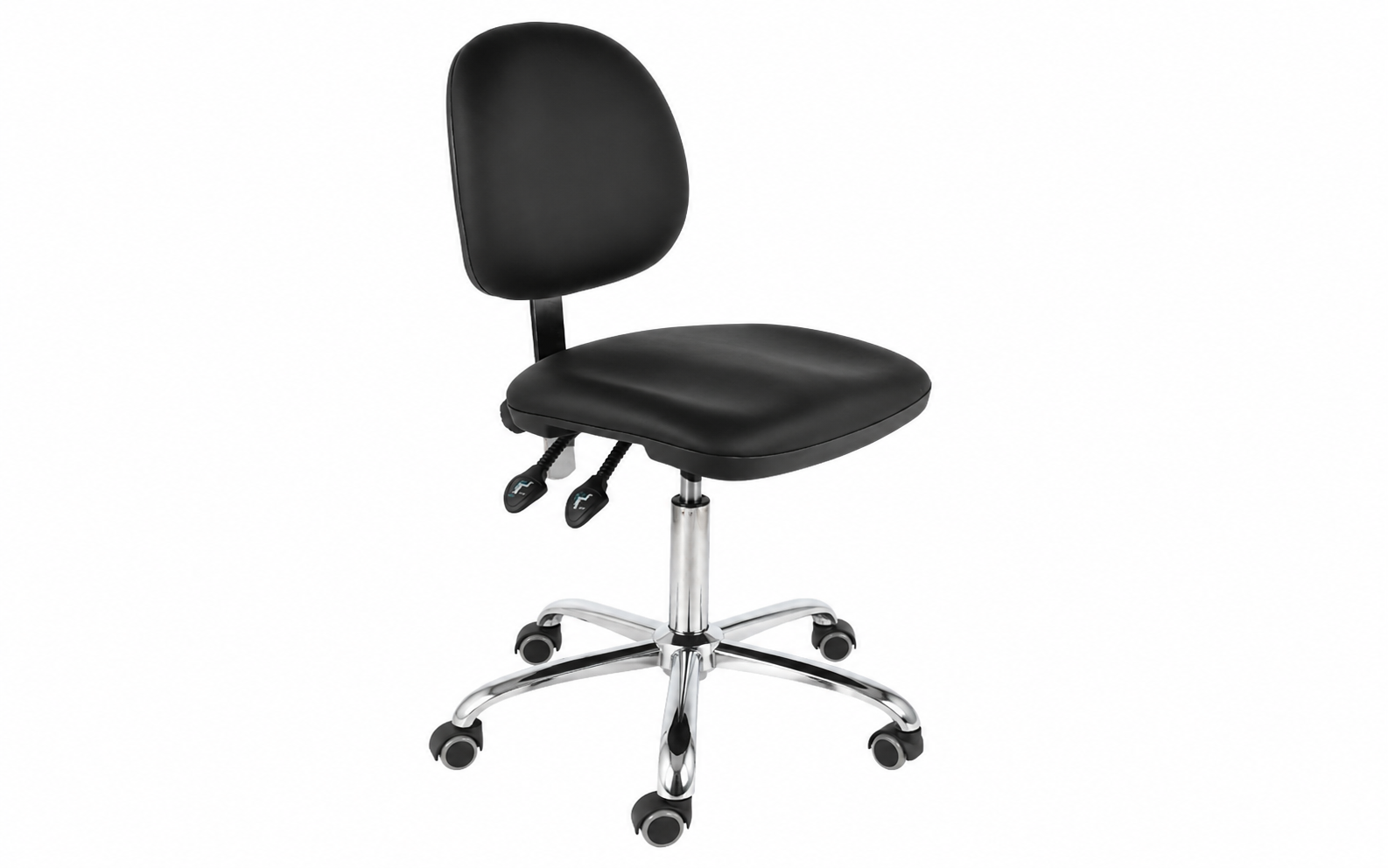
Laboratory expansion projects in Argentina can plan chair procurement more accurately by integrating seating requirements into the earliest stages of facility design rather than waiting until benches and equipment are already installed. The first step is to convert the future laboratory layout into a detailed workstation inventory that identifies every bench, instrument station, computer area, preparation zone, inspection point, and shared workspace. Each location should be classified by working height, expected number of users, shift pattern, need for mobility, floor condition, cleaning routine, and available clearance. This allows project teams to distinguish between standard-height seating, elevated bench seating, fixed-position chairs, mobile chairs, and specialized configurations. Procurement teams should also calculate demand using several scenarios: the minimum quantity needed for opening day, the expected quantity after staffing reaches normal levels, and a reserve quantity for training, damage, or future hiring. When a project is considering an industrial polyurethane with chrome foot ring and casters adjustable laboratory chair, the specification should be connected to actual applications such as elevated workstations, shared users, frequent movement between instruments, and environments where easy cleaning matters. Argentine distributors can support this planning by reviewing drawings, checking bench dimensions, providing samples, and preparing a room-by-room seating matrix. This matrix should show the model, quantity, height range, base type, caster or glide option, foot support, expected delivery phase, and responsible approver for every laboratory area. By creating this document before final quotations, buyers reduce the risk of ordering too many chairs, selecting the wrong height, or discovering that the chosen base interferes with cabinets, equipment, or circulation routes.
The second requirement is to align technical approval with project scheduling and budget control. Laboratory expansion projects often involve changing construction milestones, delayed equipment installation, revised headcount, and multiple funding approvals, so chair procurement should be divided into clear decision stages. The first stage can confirm workstation categories and user needs; the second can approve samples and technical specifications; the third can validate commercial terms, delivery timing, and spare parts; and the final stage can release purchase orders by project phase. For an industrial polyurethane with chrome foot ring and casters adjustable laboratory chair, the sample review should verify seat-to-bench alignment, caster performance on the selected floor, foot-ring comfort, ease of adjustment, cleaning practicality, and clearance around nearby equipment. The approved sample and drawing should then become the reference for production and final inspection. Argentine distributors can improve B2B project efficiency by offering phased quotations that separate immediate opening requirements from later expansion quantities. This protects cash flow and reduces storage pressure while giving the supplier better visibility into total potential demand. Buyers should also include contingency allowances for exchange-rate movement, freight changes, component shortages, and construction delays. A well-prepared procurement plan will define which items must be held locally, which can be ordered after final installation measurements, and which spare components should accompany the first shipment. This approach allows the project to remain flexible without sacrificing specification control. It also helps finance teams understand the full cost of the seating program, including samples, packaging, delivery, assembly, warranty, and future replacement parts rather than only the unit price.
The final stage is to connect advance planning with delivery execution and post-opening expansion. Before production begins, project teams should confirm site access, unloading conditions, storage capacity, assembly responsibility, room readiness, and the sequence in which laboratory zones will become operational. If an industrial polyurethane with chrome foot ring and casters adjustable laboratory chair is included in the plan, packaging should protect the polyurethane seat, chrome ring, adjustment mechanism, and casters during transport, while labeling should identify the correct room or workstation group. Phased delivery can then follow construction and commissioning milestones, preventing chairs from being stored for long periods in unfinished spaces. After each delivery, buyers should conduct a structured acceptance check covering quantity, dimensions, finish, adjustment, stability, mobility, and fit at the intended workstation. Any change in staffing or layout should be recorded so the final expansion quantity can be updated with real data rather than assumptions. Argentine distributors can use these records to forecast repeat orders, prepare local spare parts, and support additional sites or project phases. They can also create original Google-friendly content around laboratory expansion planning, chair quantity estimation, bench compatibility, phased procurement, and risk control, helping attract contractors, institutions, and industrial buyers who are preparing similar projects. For B2B customers, the greatest value of advance planning is not simply earlier ordering; it is the ability to align technical suitability, budget timing, supplier capacity, and operational readiness in one coordinated process. When seating is planned with the same discipline as equipment, utilities, and laboratory furniture, expansion projects can open on schedule, avoid costly last-minute substitutions, and establish a standardized seating platform that supports future growth across Argentina.
READ MORE