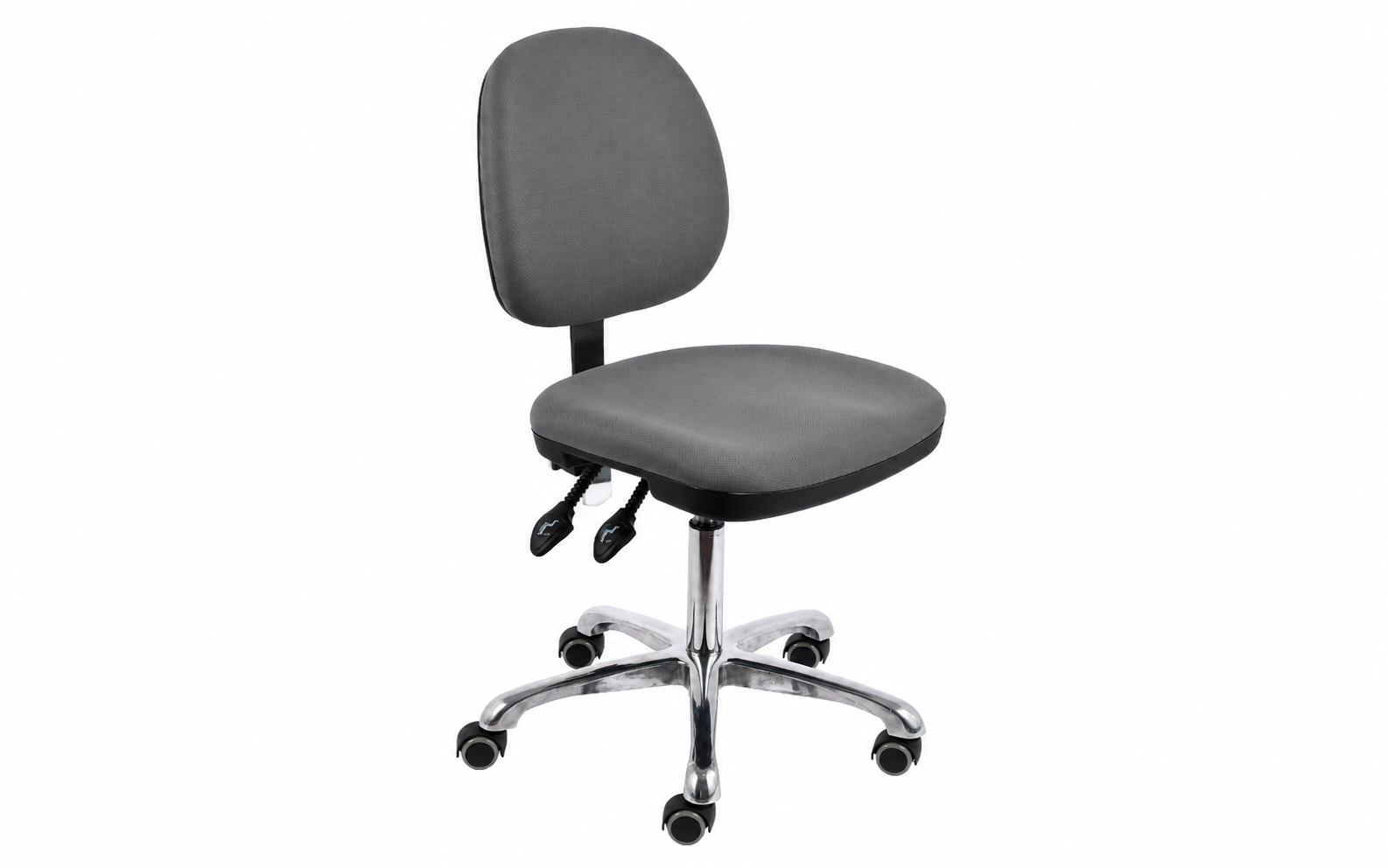
For B2B buyers and distributors in Argentina, the best laboratory chair combination is not a single universal model but a specification built around the actual work environment. Pharmaceutical, clinical, university, food-testing, electronics, and industrial laboratories often share similar furniture categories, yet they place very different demands on seat material, height range, mobility, foot support, and maintenance. In pharmaceutical and healthcare-related environments, buyers usually prioritize surfaces that are easy to wipe, components that can tolerate frequent cleaning, and designs that reduce unnecessary seams or fabric exposure. In these applications, molded polyurethane seating combined with controlled height adjustment and a stable five-star base can be more practical than upholstered seating. Where users work at elevated benches, a foot ring becomes essential because it supports posture and reduces fatigue during long shifts. In rooms where staff move between instruments, casters can improve workflow, while glides may be better for stations that require a more fixed position. An industrial polyurethane with chrome foot ring and casters adjustable laboratory chair is therefore well suited to many pharmaceutical, diagnostics, and production-support areas when the flooring, cleaning method, and bench height have been checked in advance. Argentine distributors should not sell this combination as a generic premium option; they should explain exactly which operational problems it solves. Buyers should also consider whether the same chair will be shared across multiple shifts, whether users wear protective clothing, whether the laboratory has narrow circulation paths, and whether spare casters or gas lifts need to be held locally. For large B2B projects, a sample test should confirm seat comfort, foot-ring position, movement, and surface performance before the final order. This application-first approach helps distributors avoid overspecification, reduce returns, and present a technically credible proposal to procurement teams, architects, and laboratory managers.
Research institutes, universities, and technical training centers require a different balance because their laboratories often serve many users with varied body sizes, tasks, and experience levels. In these environments, adjustability and versatility may be more important than highly specialized materials. A teaching laboratory with standard-height benches may benefit from medium-height chairs with adjustable seats and durable polyurethane or vinyl surfaces, while advanced research rooms with elevated analytical equipment may require taller cylinders, foot rings, and either casters or glides depending on the need for movement. Argentine distributors can create product families rather than quoting isolated models: one lower chair for desk-level work, one medium model for general laboratory benches, and one high model for elevated stations. This makes replacement and future expansion easier because the buyer can standardize components while matching heights to different rooms. For shared research areas, an industrial polyurethane with chrome foot ring and casters adjustable laboratory chair can provide a useful combination of cleanability, mobility, and multi-user adjustment, especially where researchers move between computers, instruments, and sample-preparation zones. However, in microscopy rooms or precision-measurement areas, a more stable base with glides may be preferable to free-rolling casters. In electronics laboratories, ESD requirements may completely change the specification, requiring conductive materials, grounding components, and verified compatibility with the facility’s control system. In food and beverage testing laboratories, the main priorities may be wipe-clean surfaces, resistance to frequent use, and easy movement between wet and dry work areas. Distributors should therefore segment their proposals by application and provide a comparison table covering seat material, base type, height range, foot support, mobility, cleaning suitability, and expected usage intensity. This not only improves the buyer’s decision but also creates original Google-friendly content for Argentina, because customers often search by use case rather than by a model number. Articles, product pages, and technical guides that explain which chair combination fits a university laboratory, food-testing facility, or electronics workstation are more valuable than copied descriptions and can attract higher-quality B2B inquiries.
Industrial laboratories, quality-control departments, pilot plants, and heavy-use testing facilities usually require the strongest combination of durability, serviceability, and workflow support. These customers may operate long shifts, expose furniture to repeated cleaning, move staff between machines, and expect replacement parts to remain available for years. In such settings, distributors should evaluate not only the seat and base but also the total product system: gas-lift quality, foot-ring locking method, caster specification, base diameter, component interchangeability, packaging, warranty, and local spare-parts support. An industrial polyurethane with chrome foot ring and casters adjustable laboratory chair can be an effective core configuration for many industrial applications because it combines a robust seat surface with elevated foot support and mobility, but the final suitability depends on floor condition, workstation height, load expectations, and the need for directional control. Some facilities may prefer soft-wheel casters for hard floors, others may require glides for stability, and some may benefit from braking casters in mixed-use zones. Argentine distributors can strengthen their B2B offer by presenting three commercial packages: a standard combination for general laboratories, a high-duty combination for intensive industrial use, and a specialized combination for ESD, clinical, or controlled environments. Each package should include clear configuration limits, sample availability, estimated lead time, recommended spare parts, and a maintenance plan. This makes comparison easier for procurement teams and helps dealers serve different customer segments without carrying excessive inventory. The best product combination is therefore the one that connects technical performance with commercial practicality: it should fit the workstation, satisfy users, remain maintainable, support future reorders, and arrive through a supply plan that matches the buyer’s project schedule. By building proposals around real applications rather than product names alone, Argentine distributors can increase quotation accuracy, improve customer confidence, and create long-term accounts across research, healthcare, education, food, electronics, and industrial sectors.
READ MORE